
The Power of Botanical Ingredients in Skincare
It has been a while since I've posted on the Botanical Ingredient Guide, but today I am feeling inspired! My life has been mostly consumed with the grind of building my little cottage and working at the boutique to fund it all. But as the home starts to take shape I feel my energy stretching back out to what inspires me… holistic and botanical beauty secrets! To get back into the swing of things I thought I would share a bit about why I choose to formulate with botanical, non-synthetic ingredients in my skin and hair care formulas.
So without further ado, here is a chemist and herbalist’s guide to the living intelligence of plants and the skin.
Botanical skincare may be having its day lately, but at its root it's so much more… More than just a wave of skincare trends and new products to consume, but a return to the way the skin naturally understands the world. Plants and skin share a biochemical language, and when you work with whole‑plant compounds, you’re not just applying moisture or active ingedients. You’re engaging in a biological conversation. Before we had stores full of shelves of never ending products, most with synthetic origins and cure-all marketing, there was nature and what the earth supplied. Maybe it's time we returned to this simpler form of care…
This blog explores why botanical ingredients matter, not as “natural alternatives,” but as complex, synergistic, bioactive systems uniquely suited to support the skin.
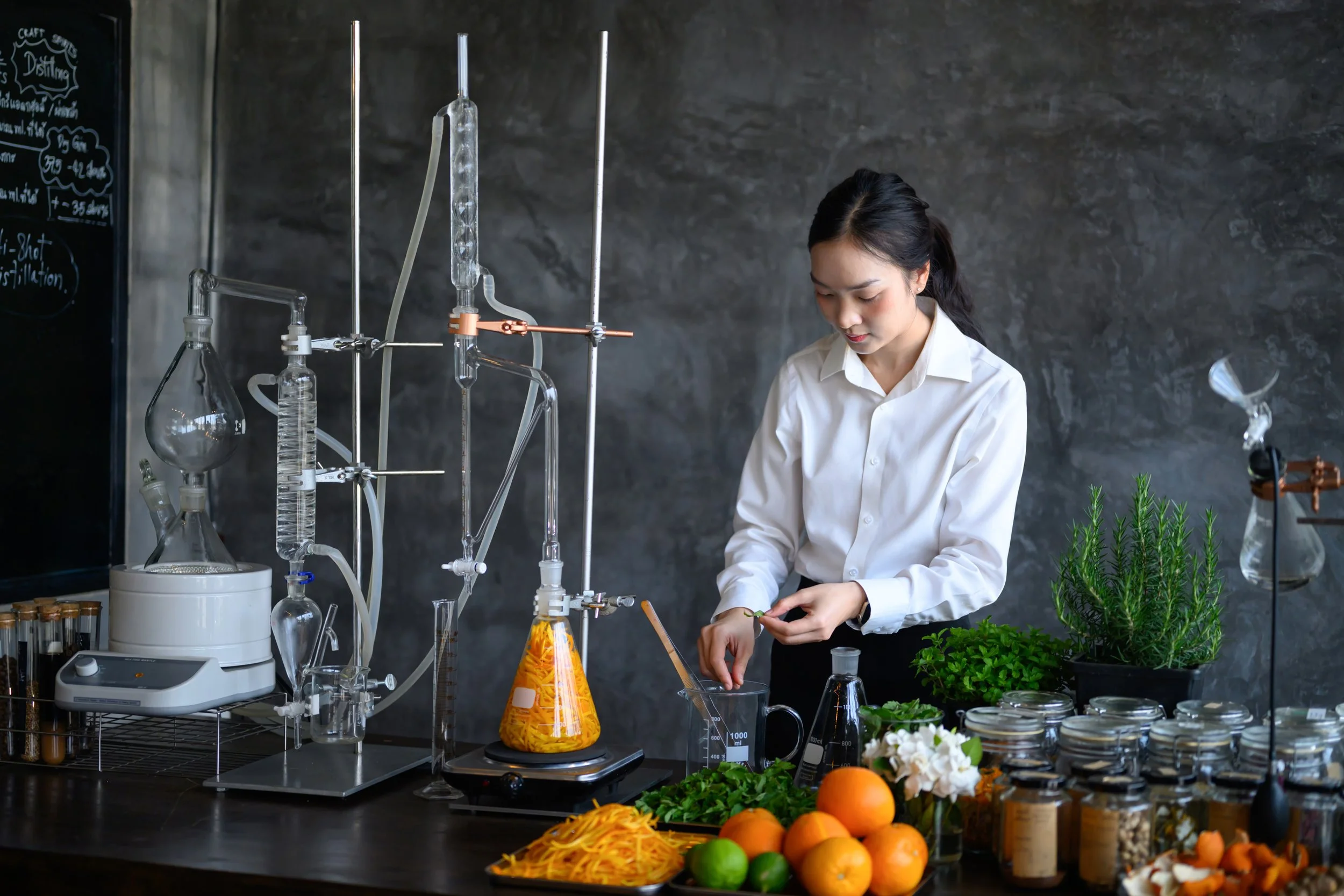
Botanical Ingredients Speak the Skin’s Language
The skin is the body’s largest organ — a living, breathing interface between our inner world and the environment around us. It’s constantly translating signals: temperature, stress, humidity, sunlight, hormones, and the chemistry of whatever we apply to it. Structurally, it’s built from lipids, proteins, water, and a complex microbiome ecosystem. To function at its best, it needs nourishment that feels familiar to its biology.
Plants offer exactly that.
Just like the skin, plants are composed of lipids, proteins, polysaccharides, minerals, and water‑based signaling molecules. This biochemical mirroring is the reason botanical ingredients integrate so seamlessly into the skin’s architecture. When you apply a whole‑plant extract, the skin doesn’t experience it as something foreign or synthetic — it recognizes it as kin.
This is the essence of biocompatibility. Plant compounds don’t sit on the surface; they participate. They interact with the skin barrier, support the acid mantle, feed the microbiome, and communicate with the skin’s immune system in ways that feel intuitive and harmonious.
Part of this harmony comes from evolution itself. Humans and plants have co‑existed and co‑evolved for millennia. Our receptors are primed to recognize plant compounds because we’ve been interacting with them since long before modern skincare existed. The skin reads botanical chemistry the way the body reads food: as something inherently compatible, nourishing, and alive.
And beyond the chemistry, there’s a relational intelligence at play. Plants carry energetics, signatures, and subtle qualities that the skin responds to. This kind of resonance is super hard to replicate in a lab. This is why plant‑based actives often feel gentler, more intuitive, and more effective for long‑term skin health.
Lets go through each of these functions in greater detail before we dive into why a holistic skincare product is better for the skin's health than synthetic, single molecule focused products.
The Skin Barrier as a Botanical Interface
To understand how botanical ingredients interact with the skin, it helps to look closely at the skin barrier itself. This outermost layer is composed of ceramides, cholesterol, fatty acids, and natural moisturizing factors. Together, they form a flexible, protective matrix that keeps moisture in and irritants out.
When we turn to plants, we see a striking mirror of what the skin naturally produces.
Botanical ingredients contain their own versions of these essential components, which is why they integrate so seamlessly into the barrier’s architecture.
Phytosterols — plant‑based analogs of ceramides — help fill in barrier gaps and support structural integrity.
Fatty acids from omega‑rich oils replenish the skin’s lipid matrix and blend effortlessly with our own sebum. Whole‑plant oils also carry built‑in antioxidants that protect barrier lipids from oxidation.
Polysaccharides create a flexible, water‑holding matrix that enhances hydration and supports barrier suppleness.
Humectants like aloe, honey, and glycerin draw moisture into the skin and help maintain a healthy moisture balance.
Because these compounds echo the skin’s own chemistry, botanicals are uniquely suited to:
repair barrier damage
restore lipid balance
reduce transepidermal water loss
soothe irritation
strengthen long‑term resilience
This is why botanical oils and extracts feel so intuitive on the skin. They aren’t foreign substances the body has to work around — they’re structural allies, offering the same building blocks the skin already relies on to stay strong, supple, and protected.
The Acid Mantle and Botanical Chemistry
If you’ve spent any time exploring skin health, you’ve probably heard of the acid mantle — but understanding what it actually is reveals why botanicals support it so beautifully.
The outermost layer of the skin, the stratum corneum, is naturally acidic. This thin, protective film sits at a pH between 4.1 and 5.8, in contrast to the body’s internal pH of around 7. This acidity isn’t incidental — it’s essential. The enzymes that maintain healthy cell turnover, barrier function, and lipid organization all require an acidic environment to work properly. The acid mantle also forms the skin’s first line of defense against pathogenic microbes.
Botanicals are uniquely aligned with this system.
Unlike many synthetic cleansers and actives that tend to be alkaline (and can disrupt the skin’s natural pH), plant‑based ingredients often fall naturally within the skin’s ideal acidic range. Hydrosols, gentle plant acids, and fermented extracts are especially supportive — they help restore the skin’s pH after cleansing and reinforce the mantle’s protective function.
Some of my favorite acid‑mantle allies include vitamin C and apple cider vinegar. Both help rebalance the skin after cleansing, creating a smooth, resilient foundation for the rest of your routine. And while there are many ways to incorporate acidic botanicals, toners remain my favorite format for daily support — they’re gentle, effective, and easy to layer.
Want to learn more about vitamin C, check out my blog, Vitamin C: A Holistic Approach for Radiant Skin.
Microbiome Parallels Between Plants and Skin
Just like the gut, the skin hosts a diverse community of microbes that live on its surface. These organisms have evolved alongside us and play an essential — though often invisible — role in maintaining the skin’s overall health. They help regulate pH, support barrier function, protect against pathogens, and even influence inflammation. In return, we provide them with a home and the nutrients they need to thrive. It’s a beautifully symbiotic relationship.
What’s fascinating is that plants have microbiomes too. Their leaves, roots, and surfaces host communities of bacteria, yeasts, and fungi that help them adapt, defend, and communicate with their environment. Because of this shared ecological structure, botanical ingredients often contain the very compounds our own skin microbiome depends on.
The skin’s microbial ecosystem thrives on:
prebiotic fibers
plant sugars
mild acidity
gentle cleansing agents
Botanical ingredients naturally provide all of these.
Prebiotic polysaccharides like inulin and mucilage feed beneficial bacteria.
Acidic hydrosols — rose, chamomile, helichrysum — help maintain the skin’s ideal pH.
Gentle botanical surfactants such as soapwort and yucca cleanse without stripping.
Bioferments (like lactobacillus ferments) introduce beneficial metabolites that support microbial diversity.
Because botanicals work with the skin’s ecology rather than against it, they’re especially supportive for sensitive, reactive, acne‑prone, or aging skin. Instead of disrupting the microbiome, they help cultivate balance — creating an environment where the skin can repair, regulate, and thrive.
This is the heart of microbiome‑friendly skincare: nurturing the living ecosystem that keeps the skin resilient.
Botanicals and the Skin’s Immunity and Inflammation
The skin’s immune system is constantly working behind the scenes, responding to environmental stressors, microbial shifts, emotional stress, and even the products we apply. When this system becomes overwhelmed or dysregulated, inflammation shows up on the surface as acne, eczema, rosacea, premature aging, or general barrier dysfunction. In many ways, inflammation is the skin’s universal language for “something is out of balance.”
Botanical ingredients shine here because plants are inherently equipped with their own anti‑inflammatory defense systems. They produce a wide spectrum of compounds designed to protect themselves from stress, pathogens, UV light, and environmental fluctuations. Many of these same compounds support the skin’s immune intelligence.
Plants contain:
flavonoids — antioxidant and anti‑inflammatory modulators
terpenes — soothing, antimicrobial, and barrier‑supportive
alkaloids — potent immune‑balancing compounds
tannins — astringent, protective, and calming
mucilage — cooling, hydrating, and irritation‑reducing
resins — antimicrobial and wound‑supportive
adaptogens — stress‑modulating allies that help the skin recalibrate
What makes botanicals so special is not just their ability to soothe inflammation, but their ability to modulate it. Instead of shutting down the immune response (as many synthetic actives do), plant compounds help guide the skin back toward equilibrium. They support the body’s natural repair pathways, reduce over‑reactivity, and strengthen resilience over time.
This is the heart of botanical immunology: plants don’t override the skin’s intelligence — they collaborate with it.
Whole‑Plant Synergy Outperforms Isolated Actives
Another place where botanicals truly shine is in their complexity. While a synthetic ingredient is often a single, isolated molecule designed to perform one specific function, a botanical ingredient is an entire ecosystem. Whole‑plant extracts contain a constellation of compounds — antioxidants, lipids, polysaccharides, minerals, aromatic molecules, and more — all working together in ways that no lab‑isolated active can fully replicate.
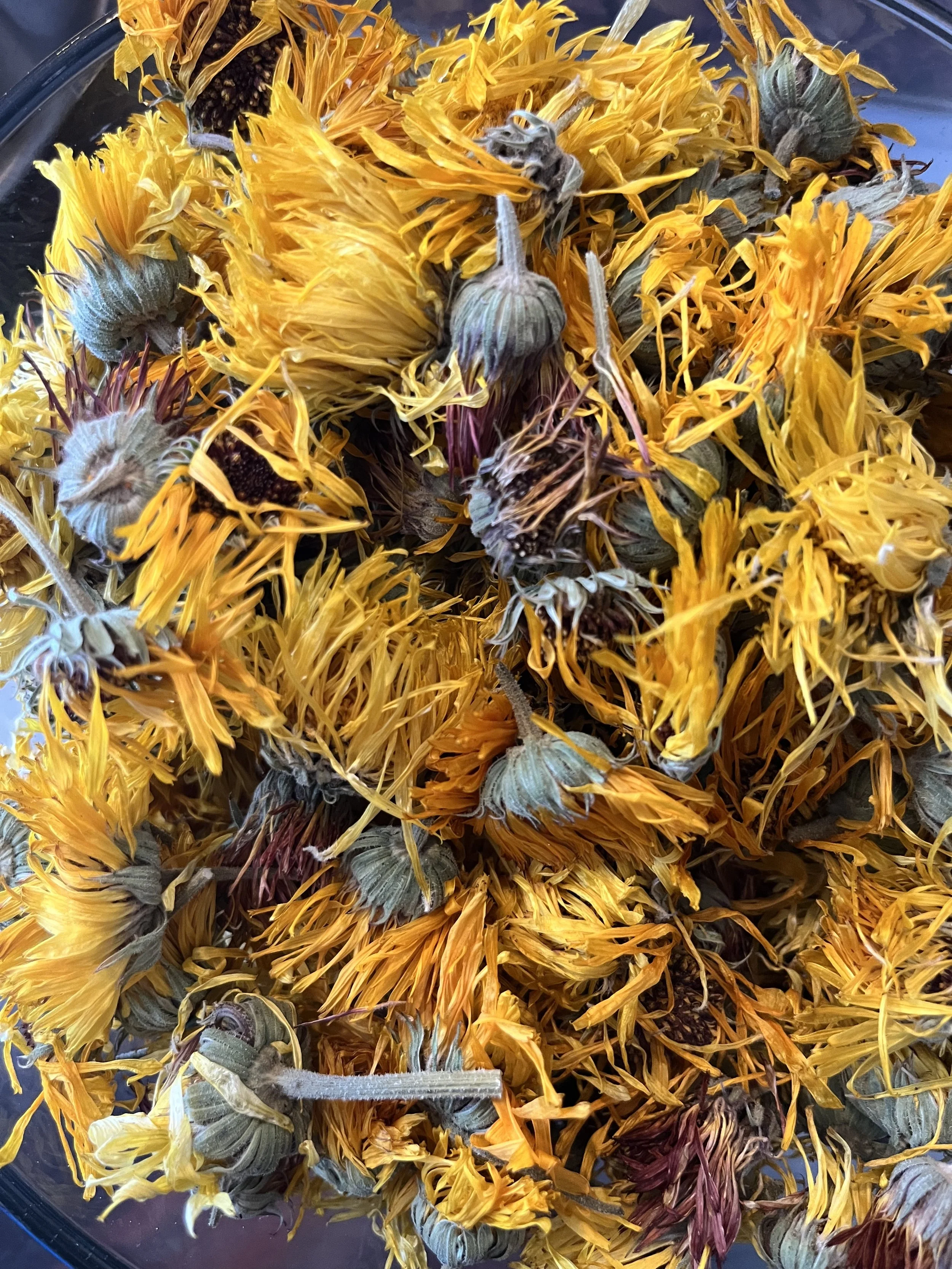
Take calendula, for example. Its bright orange flowers contain flavonoids, carotenoids, triterpenoids, polysaccharides, resins, and aromatic compounds. Each of these has its own role: some soothe inflammation, some support repair, some hydrate, some protect against oxidative stress. But the real magic lies in how they interact. Together, they create a synergistic healing effect far greater than the sum of their parts.
This synergy is why botanical ingredients excel at:
reducing inflammation
supporting barrier repair
enhancing hydration
protecting against oxidative stress
improving long‑term resilience
In whole‑plant skincare, you’re not relying on a single molecule to do all the work. You’re working with a living matrix of compounds that buffer, balance, and amplify each other. This is the heart of phytochemical synergy — the principle that plants are most powerful when their full spectrum of constituents is kept intact.
It’s also why botanical formulations often feel more holistic and intuitive on the skin. They don’t force a single pathway; they support multiple layers of skin health at once, offering nourishment, protection, and repair in a way that mirrors nature itself.
Botanical ingredients matter because they are alive: chemically, energetically, and relationally.
They don’t just sit on the skin. They interact, communicate, and collaborate with it.




Hello and welcome! I'm Eve, a Chemist turned Herbalist, sharing the wonders of plant medicine and botanical skincare. Join me on this journey to Learn, Create, and Align your Divine!