
Scalp and Beard Balm for Stimulating Hair Growth
Skill: Expanding Topical Formulation Skills for Haircare
Elevate your haircare routine with our Scalp and Beard Balm for Hair Growth! Building on the skills learned in previous balm recipes, this formulation focuses on creating topicals that promote hair and scalp health. You will learn how to select and blend herbs and essential oils specifically for hair growth and scalp care. Master the art of crafting haircare balms infused with powerful herbal ingredients to stimulate and soothe your scalp.
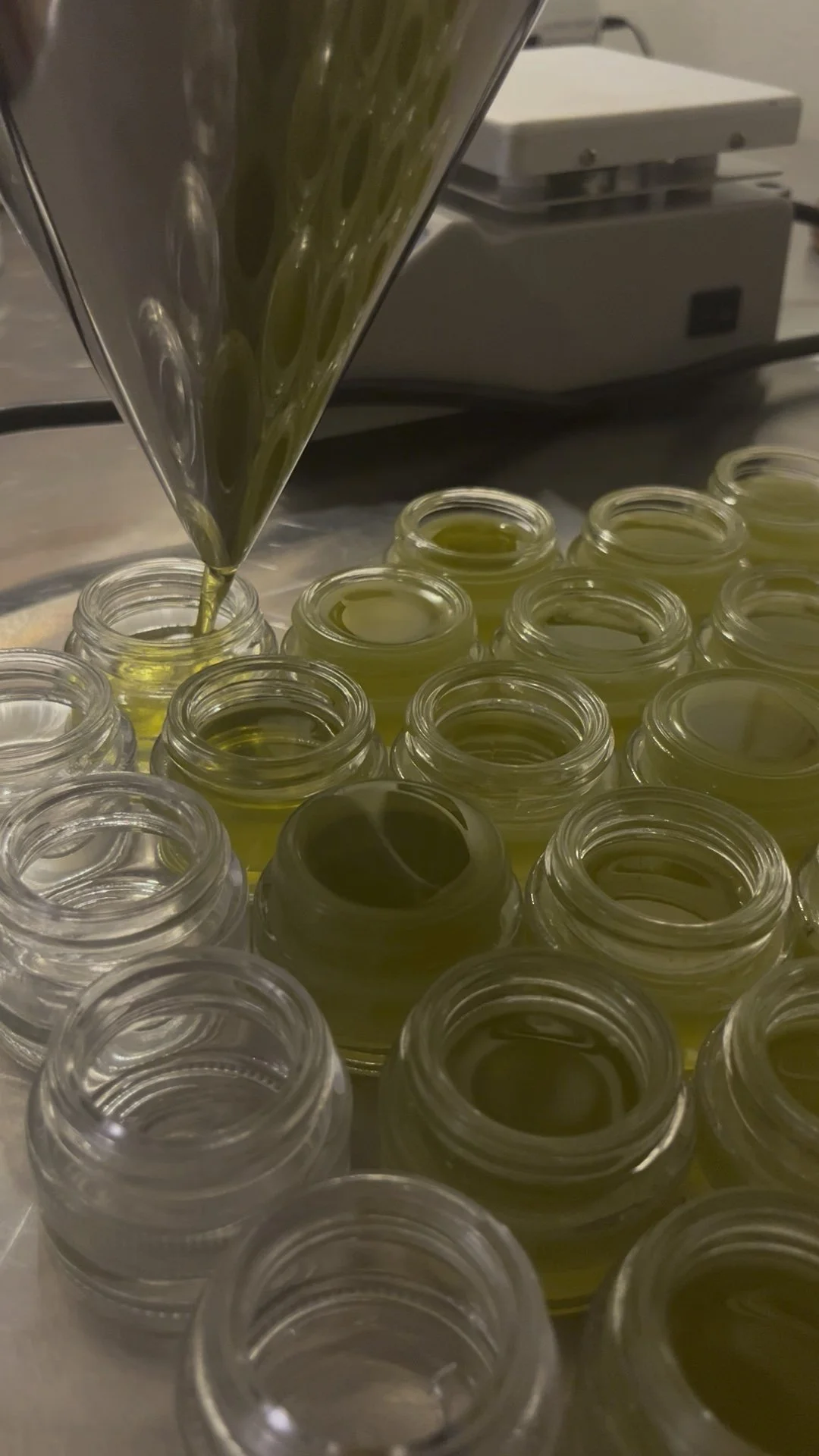
Balm filling
This week, I have a divine recipe for you—a Scalp and Beard Balm for Hair Growth! This magical balm, infused with one of my favorite herbs, patchouli, is perfect for stimulating and soothing your scalp between washes. Patchouli is a traditional remedy for strengthening and promoting healthy hair growth. But that's not all—this balm also includes other stimulating herbs like rosemary, castor oil, cinnamon, lavender, and sal butter, all working together to promote skin and scalp health. Too good not to share, I hope you love it as much as I do!
A few years ago, I was under a lot of stress from my job, leading to some hair loss. I had a stubborn bald spot that wouldn’t grow back, no matter what store-bought products I tried. I began researching natural remedies and discovered the power of patchouli and cinnamon. I made an oil with a couple of drops of their essential oils, and within a month, I saw hair growth! This experience ignited my love for using plants in my hair care routine. Since then, I’ve made botanical hair care a key part of my profession, creating products for clients seeking some herbal goodness.
Benefits of Each Herb
This recipe features some of my favorite plants for hair growth; including patchouli and cinnamon, but also lavender and rosemary to soothe, and castor oil and sal butter to nourish. Let us dive into the benefits of each of these plants before we get into the recipe.
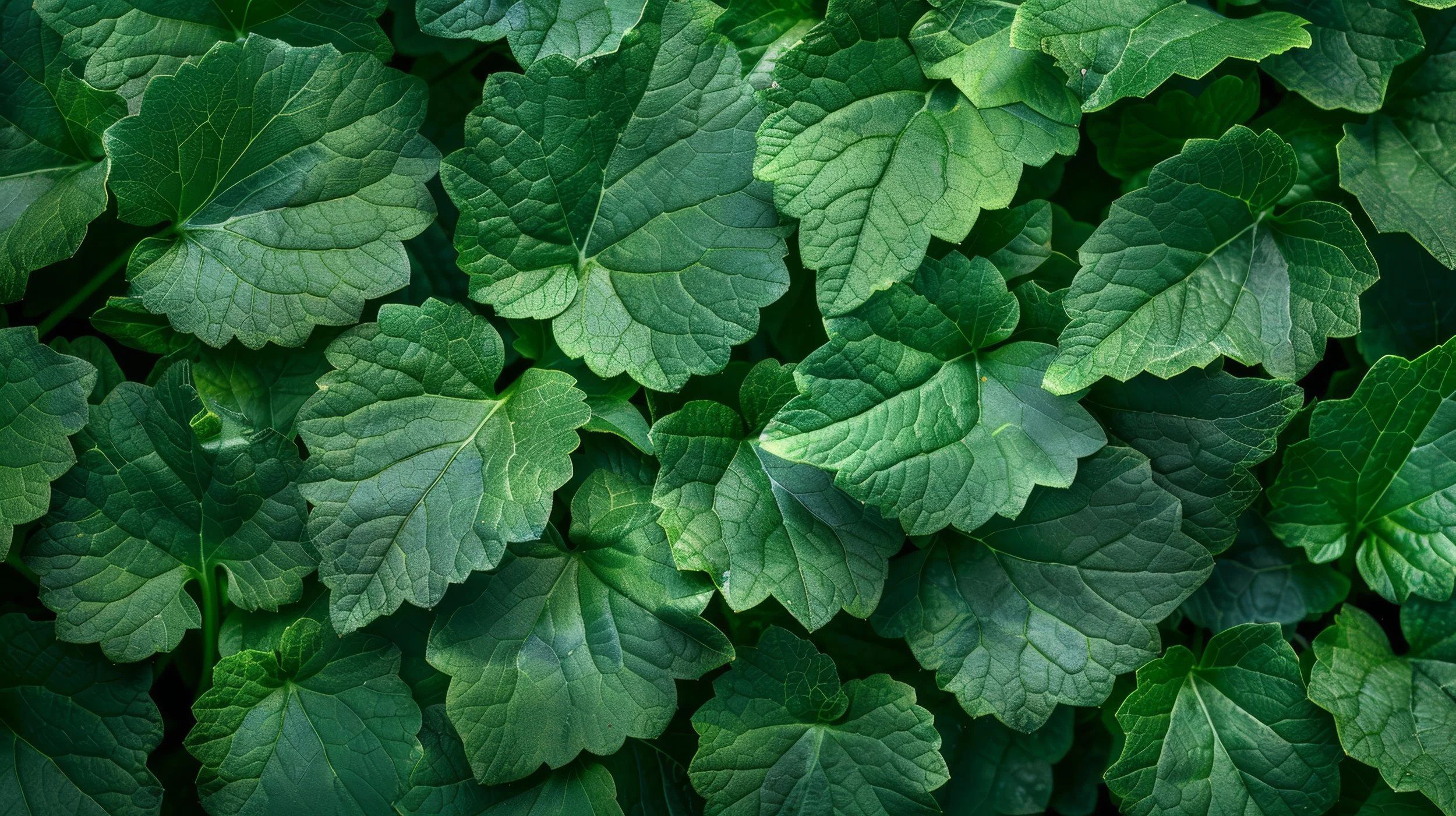
Patchouli leaves
Patchouli
The inspiration for this recipe came from my annual batch of patchouli-infused oil. Patchouli is not only beautifully fragrant but also has medicinal benefits. It’s featured in many Ayurvedic and Chinese remedies for hair loss. I always extract patchouli in olive oil, which is great for promoting skin health. The volatile oils of the patchouli plant give it its therapeutic value, so I dry my leaves in a shaded, low-temperature area to preserve the oils. A heat-assisted extraction into to oil fully captures its divine scent. For more information on how to make herbal oil infusions check out my page on Oil and Butter Infusions!
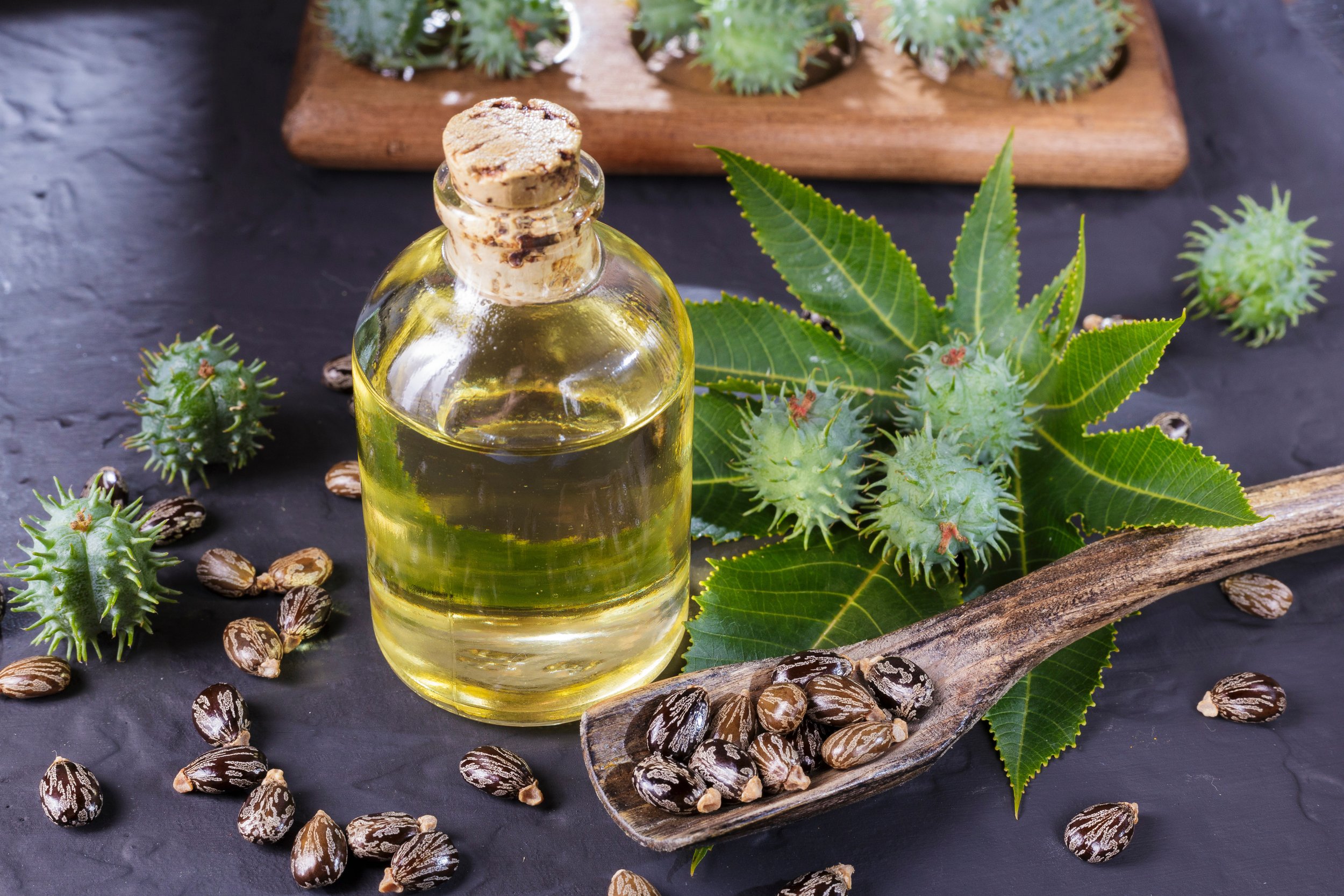
Castor beans and oil
Castor Oil
Castor oil is well-known for its nourishing and moisturizing qualities for hair. Ricinoleic acid, the main compound, targets the protein prostaglandin D2 synthase (PTGDS) to stimulate hair growth and soothe the skin with its anti-inflammatory properties. I like using hydrogenated castor jelly for its sticky texture, but you can substitute liquid castor oil if you prefer.
Cinnamon
Cinnamon is another well known herb used in hair growth treatments. Cinnamic acid is responsible for its action which works in a different way that castor oil. Where castor oil inhibits a protein to stimulate hair growth, cinnamon promotes the elongation of hair follicles by increasing oxytocin signaling, stimulating hair growth and the formation of new follicles. I use cinnamon essential oil in low amounts in formulations because it’s very warming and can be irritating in high concentrations. Start small, just a few drops, and see how you respond before increasing the quantity.
Rosemary
The next herb I chose for this balm is rosemary. While rosemary doesn't increase hair growth, it is pivotal for promoting scalp health, acting to balance the scalp and cure dandruff due to its antimicrobial action. One of the leading causes of hair loss is actually an imbalance in the microbiome of the scalp which manifests as dandruff! It's amazing for the skin and helps preserve the formula by preventing the oil from going rancid over time.
Lavender
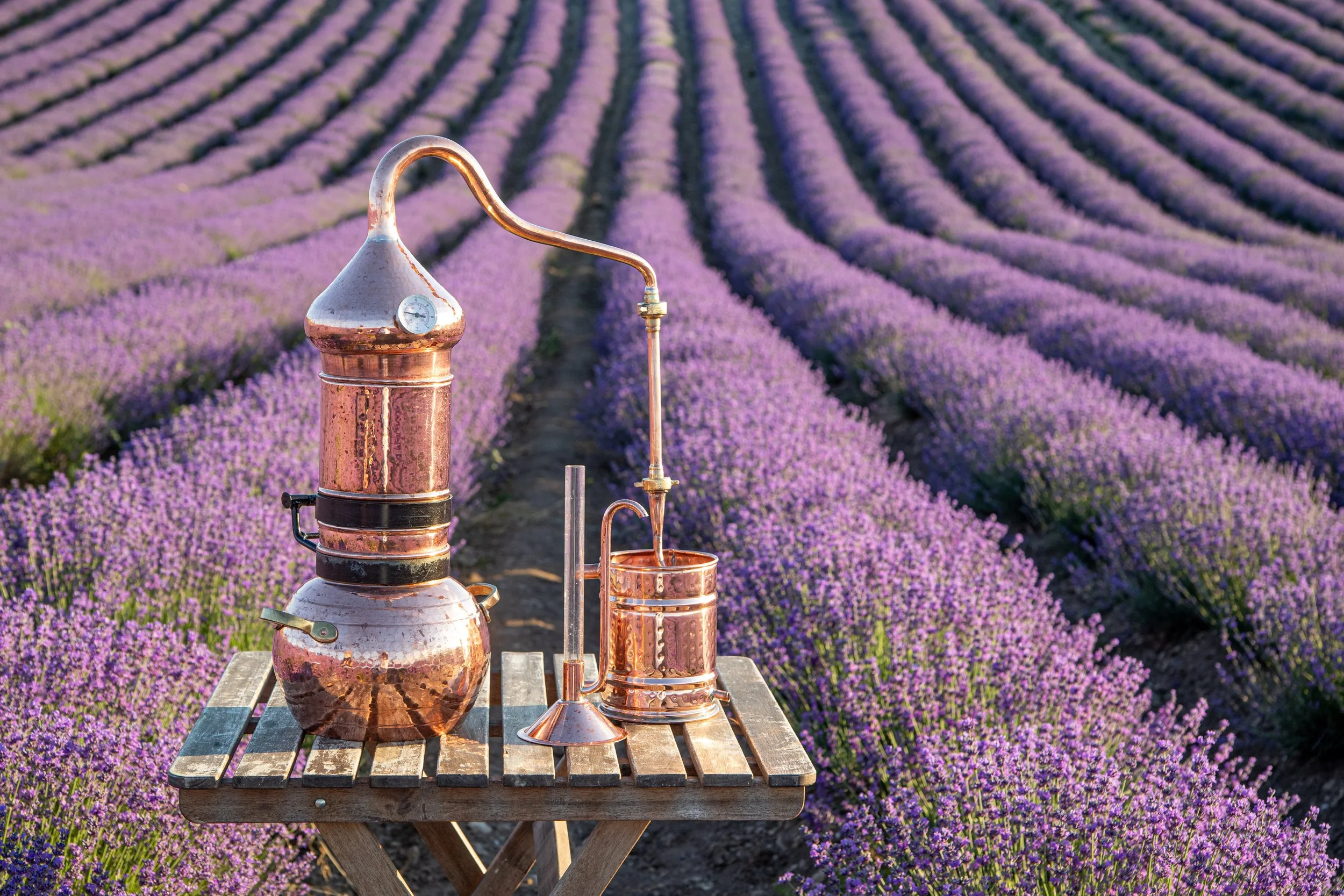
Lavender field and copper pot distillation
Lavender is renowned for its anti-anxiety effects, but it also has powerful antimicrobial actions. Volatile oils like linalool, limonene, and linalyl acetate stimulate hair growth and establish healthy hair follicles while soothing the skin.
Sal Butter
Sal butter is my go to plant butter in hair formulations. It promotes hair and scalp health and adds a luxurious finish to the balm. Unlike shea butter, sal butter doesn’t crystallize as readily, leaving your balm smooth for longer. If sal butter isn’t available, feel free to substitute shea butter at the same quantity.
Scalp and Beard Balm for Stimulating Hair Growth Recipe
Ingredients
To make about 4oz of balm you will need the following ingredients…
87 grams Patchouli in Olive Oil Infusion (6 1/2 tbsp)
12 grams Beeswax (1 1/4 tbsp)
9.5 grams Sal Butter (1 tbsp)
6 grams Castor Oil or Jelly (1/2 tbsp)
1.5 grams Rosemary Extract (1/4 tsp)
1.5 grams or one capsule Vitamin E (1/4 tsp)
15- 20 drops Lavender Essential Oil
3-5 drops Cinnamon Essential Oil
Procedure
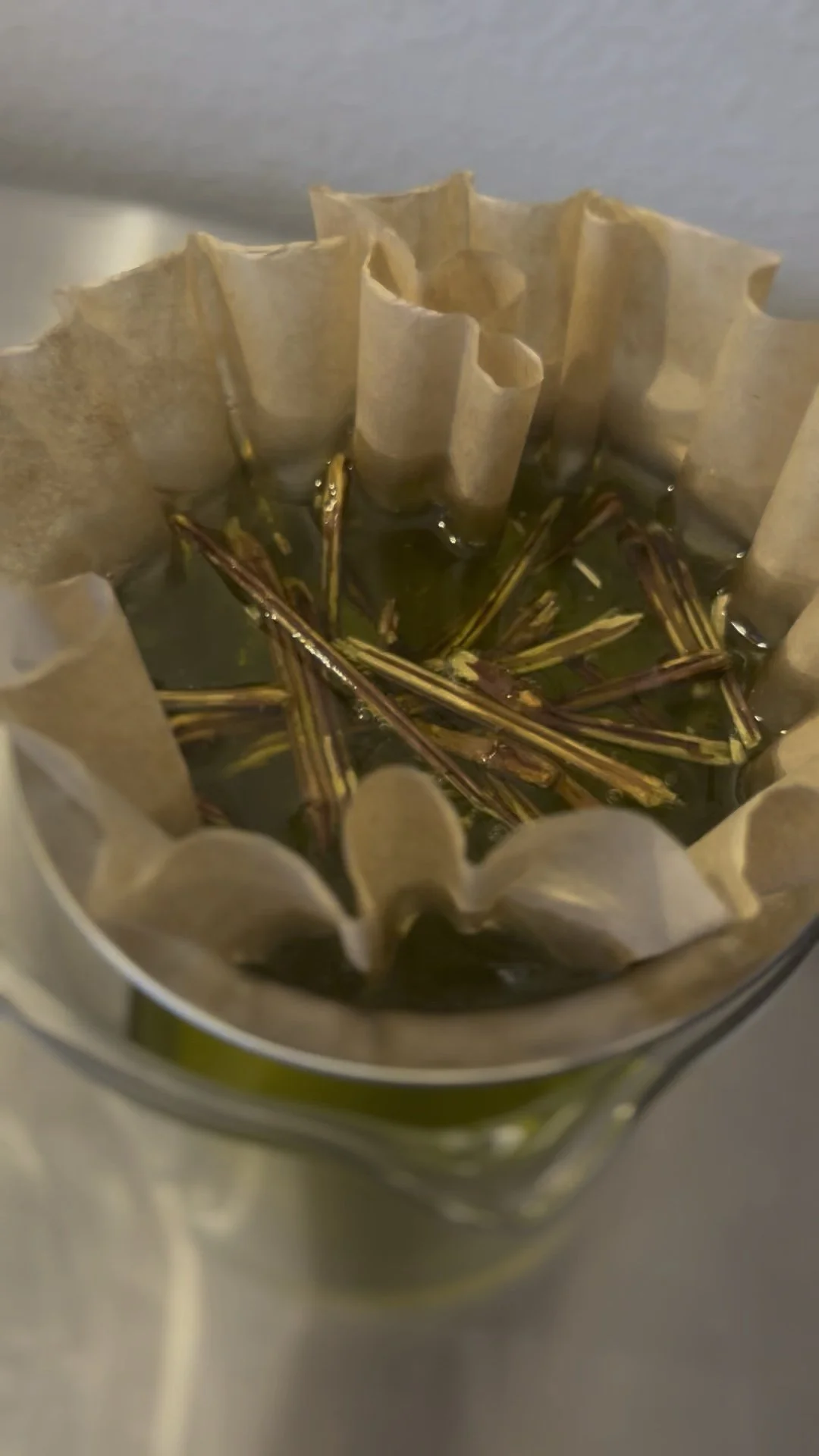
Patchouli oil infusion
Creating Herbal Oil Infusions
For a complete guide, see my page on Oil and Butter Infusions. Here’s a quick rundown:
Room Temp Infusion:
Obtain dried plant material.
Place the plant material in an airtight container and pour your menstruum of choice over the herbs.
Seal the container and thoroughly mix the contents.
Shake the container daily for 2-6 weeks or apply low heat for 6-8 hours in a double boiler, stirring often.
Strain the oil, and voilà! You have an herbal oil infusion!
2. Heat Assisted Infusion:
Obtain dried plant material.
Place the plant material in a bowl and pour your menstruum of choice over the herbs.
Set up a double boiler and place the bowl with the herbs and oil over the pot containing heated water.
Apply low heat for 6-8 hours, stirring often.
Strain the oil, and voilà! You have an herbal oil infusion!
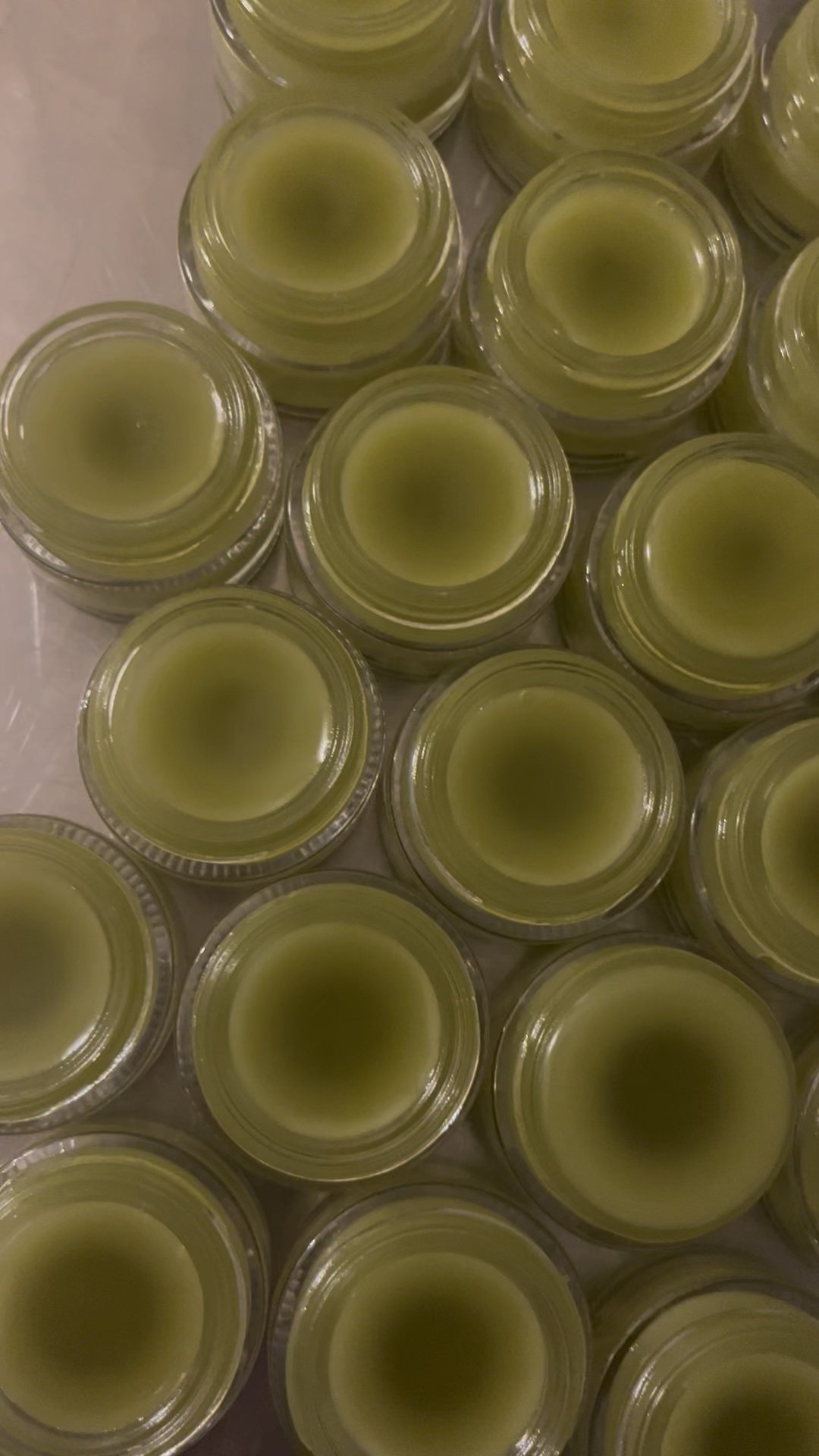
Solidifying balm
Making the Balm: Double Boiler Method
Add a small amount of water to your pot and turn the heat to medium-low. Ensure not to add too much water so that none gets into your balm. If using a double boiler, set that up instead.
Weigh each ingredient with your kitchen scale and add it to a bowl, skipping the essential oils for now.
Place the bowl containing the balm ingredients over the heating water. Slowly heat until the waxes and butters melt, stirring frequently to help it melt evenly and faster.
Once melted, remove the balm from the heat and add your essential oils dropwise, smelling as you go to avoid adding too much.
Stir to mix and pour the balm into a jar while it is still liquid. Allow it to completely solidify before enjoying.
And there you have it—a potion fit for a hair wizard! This Scalp and Beard Balm, infused with the enchanted essence of patchouli, rosemary, cinnamon, and lavender, is ready to cast its spell on your locks. As you massage this balm into your scalp or beard, imagine the plants whispering their age-old secrets, nurturing each strand with their mystical powers. Let the soothing scent and nourishing touch transport you to a lush, fragrant forest where your hair can grow wild and free. Enjoy the magic, and may your hair thrive with nature's blessing!
References
Fatima, S.; Farzeen, I.; Ashraf, A.; Aslam, B.; Ijaz, M.U.; Hayat, S.; Sarfraz, M.H.; Zafar, S.; Zafar, N.; Unuofin, J.O.; et al. A Comprehensive Review on Pharmacological Activities of Pachypodol: A Bioactive Compound of an Aromatic Medicinal Plant Pogostemon Cablin Benth. Molecules 2023, 28, 3469. https://doi.org/10.3390/molecules28083469
Sarkar, R., Podder, I., Gokhale, N., Jagadeesan, S., & Garg, V. K. (2017). Use of vegetable oils in dermatology: an overview. International journal of dermatology, 56(11), 1080–1086. https://doi.org/10.1111/ijd.13623
Mysore, V., & Arghya, A. (2022). Hair Oils: Indigenous Knowledge Revisited. International journal of trichology, 14(3), 84–90. https://doi.org/10.4103/ijt.ijt_189_20
Fong, P., Tong, H. H., Ng, K. H., Lao, C. K., Chong, C. I., & Chao, C. M. (2015). In silico prediction of prostaglandin D2 synthase inhibitors from herbal constituents for the treatment of hair loss. Journal of ethnopharmacology, 175, 470–480. https://doi.org/10.1016/j.jep.2015.10.005
Kageyama, T., Seo, J., Yan, L. et al. Cinnamic acid promotes elongation of hair peg-like sprouting in hair follicle organoids via oxytocin receptor activation. Sci Rep 14, 4709 (2024). https://doi.org/10.1038/s41598-024-55377-y
Lee, B. H., Lee, J. S., & Kim, Y. C. (2016). Hair Growth-Promoting Effects of Lavender Oil in C57BL/6 Mice. Toxicological research, 32(2), 103–108. https://doi.org/10.5487/TR.2016.32.2.103