
Botanical Lotion and Cream: Two Essential Herbal Skincare Recipes
Skill Focus: Foundational Lotion & Cream Formulation Skills
In this post, you’ll learn how to make two cornerstone products in botanical skincare: a Basic Botanical Cream and a Basic Herbal Lotion. Both recipes are intentionally simple, designed to help you master the core formulation skills before branching into your own custom blends with herbal infusions, essential oils, and active ingredients.
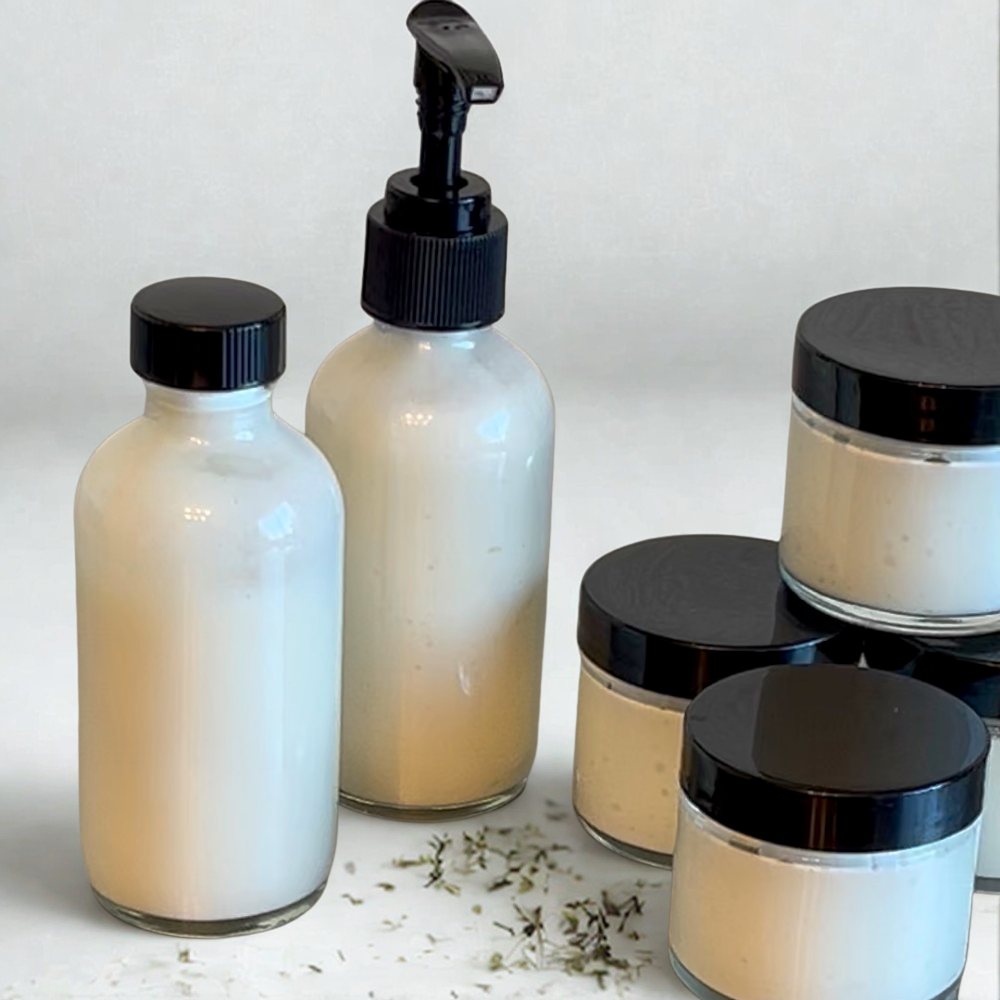
In botanical skincare, creams and lotions share the same foundational architecture—an emulsion of oil and water phases—but their proportions, textures, and delivery styles make them distinct.
Lotions are high in water, light in texture, and quick to absorb. They excel at delivering water-soluble actives like flavonoids and antioxidants into the skin’s upper layers, making them ideal for daily hydration, warmer climates, or layering under richer products.
Creams contain a higher oil and butter content, creating a denser, more occlusive texture. They’re designed for barrier repair, deep nourishment, and sustained release of both oil- and water-soluble actives—perfect for dry, mature, or seasonally stressed skin.
Emulsion Building & Phase Management
These recipes focus on phase management—the art of heating, combining, and stabilizing oil and water phases to create a uniform, stable emulsion. Along the way, you’ll practice:
Using xanthan gum as a stabilizer and texture modifier
Balancing oil-to-water ratios for desired texture and absorption
Incorporating botanicals into the correct phase for maximum potency
Temperature control to protect heat-sensitive ingredients
pH testing and adjustment for product safety and preservative efficacy
Mastering these skills will give you the confidence to adapt any lotion or cream formula to your own herbal and sensory vision.
Basic Botanical Cream Recipe
Creams marry oil- and water-soluble actives in a rich, occlusive matrix that lingers on the skin, locking in hydration and delivering nutrients over time. This recipe demonstrates a two-phase emulsion system supported by xanthan gum, which helps disperse the water phase evenly into the oil phase for a smooth, stable cream.
This particular cream is designed as a moment of stillness—a grounding formula that nourishes both skin and spirit. The base of botanical hydrosols offers gentle hydration and plant aromatics, while kokum butter and cetyl alcohol create a cushiony texture that seals in moisture. Jojoba oil adds lightweight nourishment without greasiness, and the essential oil blend is fully customizable to your mood or skin needs.
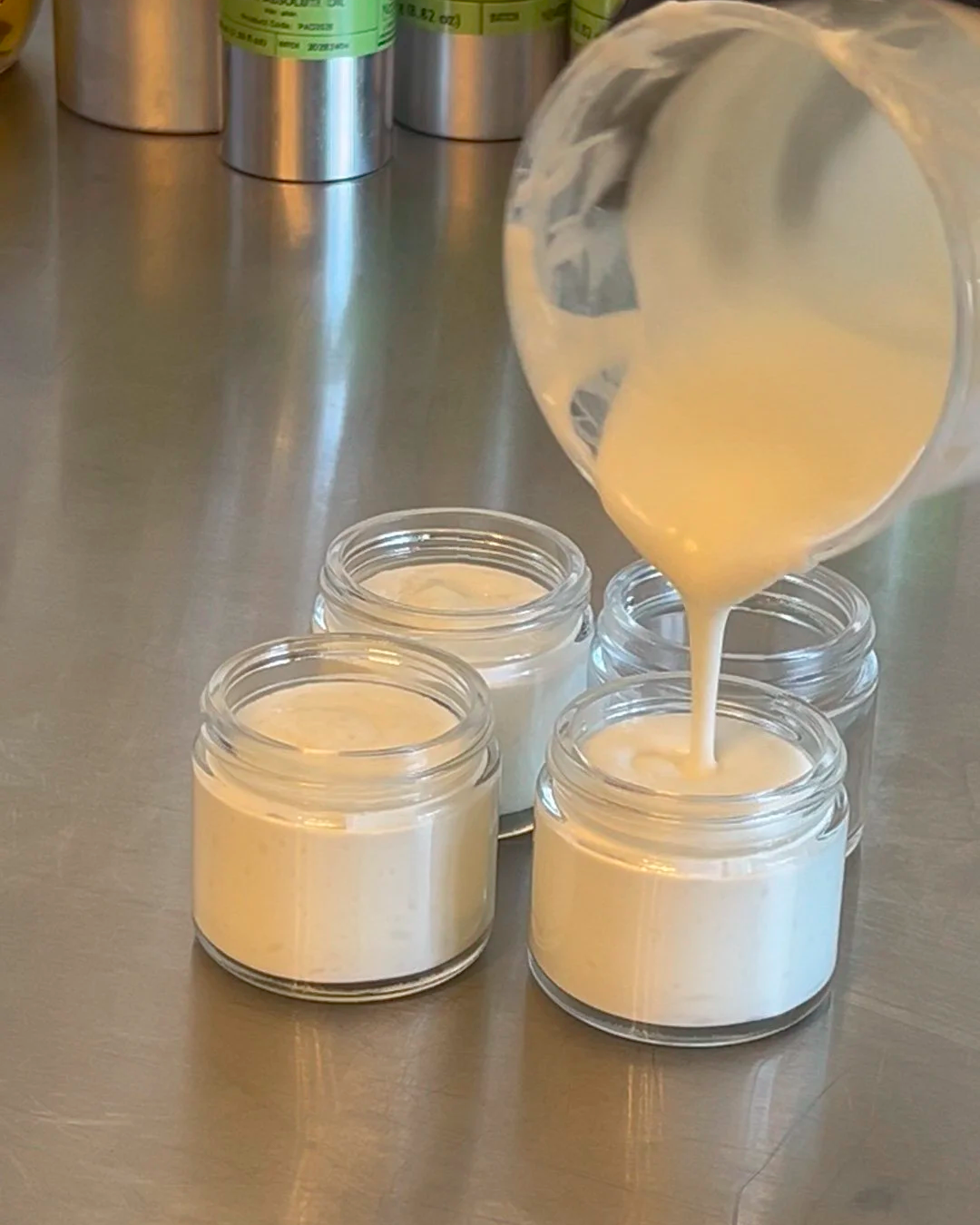
Why you’ll love it:
Ideal for evening rituals, post-shower body care, or as a hand cream for mindful self-massage
Rich enough for dry or mature skin, yet absorbs without a heavy residue
A versatile base you can adapt with herbal infusions, CO₂ extracts, or actives like panthenol or niacinamide
Ingredient Breakdown
Botanical Hydrosol (56.6%) – Forms the water phase, delivering hydration and water-soluble plant compounds. Choose hydrosols that match your skin goal (e.g., rose for soothing, chamomile for calming).
Potassium Sorbate (0.2%) – A preservative booster and pH stabilizer that helps inhibit yeast and mold growth.
Preservative Blend (1%) – Broad-spectrum protection against bacteria, yeast, and mold.
Xanthan Gum (0.2%) – Stabilizes the emulsion and adds a subtle gel-like body.
Cetyl Alcohol (15%) – A fatty alcohol that thickens, stabilizes, and adds a velvety slip.
Kokum Butter (15%) – A firm, non-greasy butter that provides occlusion and a rich, cushiony feel.
Vitamin E (1%) – An antioxidant that helps protect oils from oxidation and supports skin barrier health.
Jojoba Oil (10%) – A lightweight, skin-balancing oil that mimics the skin’s natural sebum.
Essential Oil Blend (1%) – Customizable for scent and therapeutic effect; add in the cool-down phase.
Formula – 200 g Batch
113.20 g Botanical Hydrosol
0.40 g Potassium Sorbate
2.00 g Preservative Blend
0.40 g Xanthan Gum
30.00 g Cetyl Alcohol
30.00 g Kokum Butter
2.00 g Vitamin E
20.00 g Jojoba Oil
2.00 g Essential Oil Blend
Formulation Procedure:
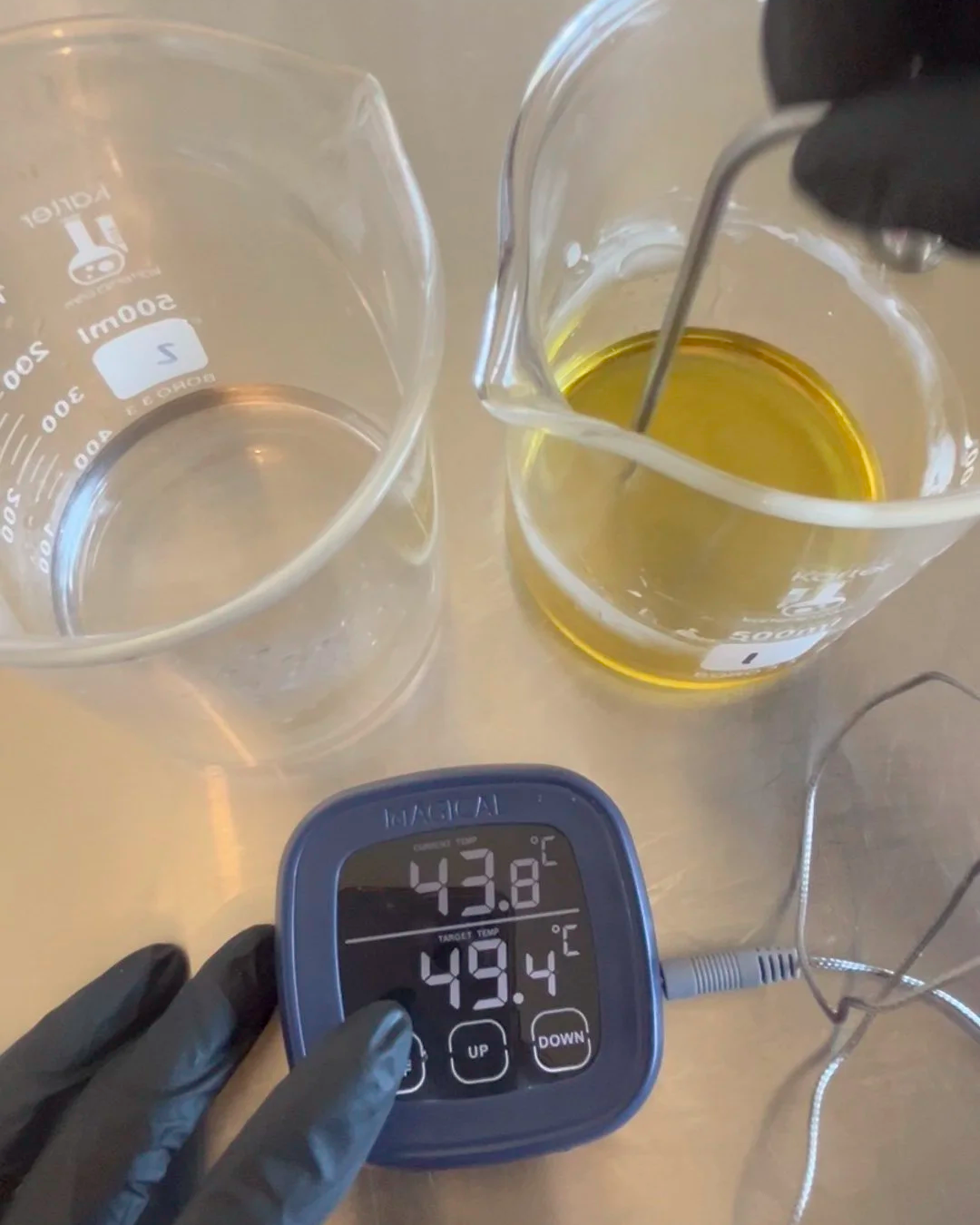
Heat oil phase and water phase separately to below 55 °C.
Add xanthan gum to the oil phase; mix until dispersed.
Slowly add water phase into oil under shear until emulsion forms.
Cool to below 45 °C and blend in essential oils and preservatives.
Test pH and adjust if needed.
Basic Herbal Lotion Recipe
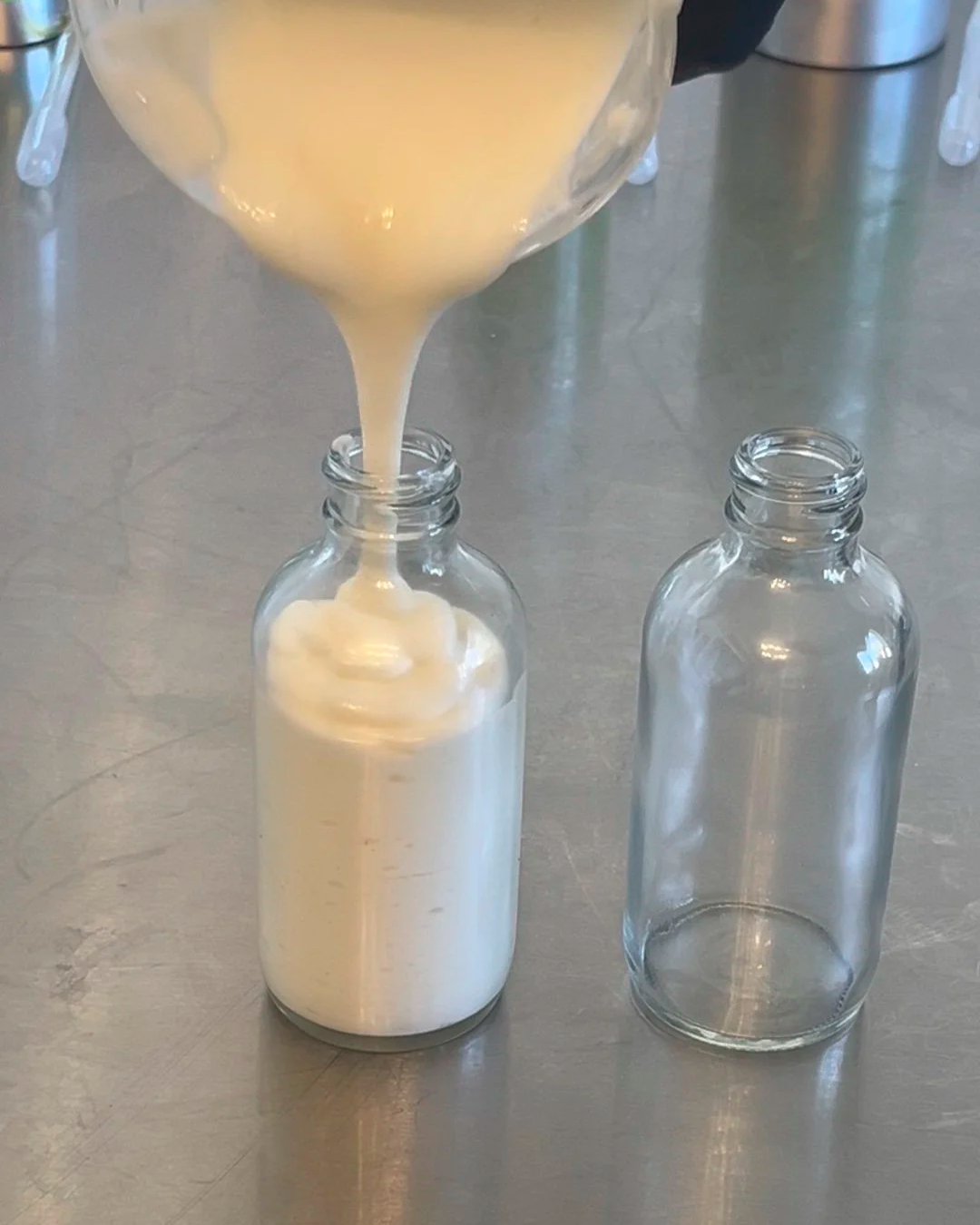
Lotions are the breath of fresh air in the emulsion family—lightweight, quick-absorbing, and perfect for delivering water-soluble actives deep into the skin’s surface layers. This recipe uses a three-phase system, incorporating a gel phase made with xanthan gum and glycerin for silky slip and improved stability.
With a high water phase and minimal butter content, this lotion glides on effortlessly and disappears into the skin, leaving only a soft, hydrated finish. Hydrosols form the aromatic base, glycerin draws in moisture, and jojoba oil imparts a subtle glow without heaviness. The essential oil blend is yours to customize—choose bright, energizing notes for morning use or calming florals for an evening wind-down.
Why you’ll love it:
Perfect as a morning face or body lotion
Layers beautifully under facial oils or sunscreen
Adaptable for warmer seasons or humid climates
A great starting point for experimenting with herbal infusions, humectants, and lightweight esters
Ingredient Breakdown
Botanical Hydrosol (73.8%) – The main water phase, delivering hydration and plant aromatics.
Glycerin (2%) – A humectant that draws water into the skin for lasting hydration.
Xanthan Gum (1%) – Creates the gel phase for stability and a silky glide.
Potassium Sorbate (0.2%) – Preservative booster against yeast and mold.
Preservative Blend (1%) – Broad-spectrum microbial protection.
Cetyl Alcohol (6%) – Adds body, stability, and a soft, emollient feel.
Kokum Butter (4%) – Provides a touch of occlusion and richness without heaviness.
Vitamin E (1%) – Antioxidant protection for oils and skin barrier support.
Jojoba Oil (10%) – Lightweight emollient for softness and subtle glow.
Essential Oil Blend (1%) – Customizable aromatic and therapeutic profile.
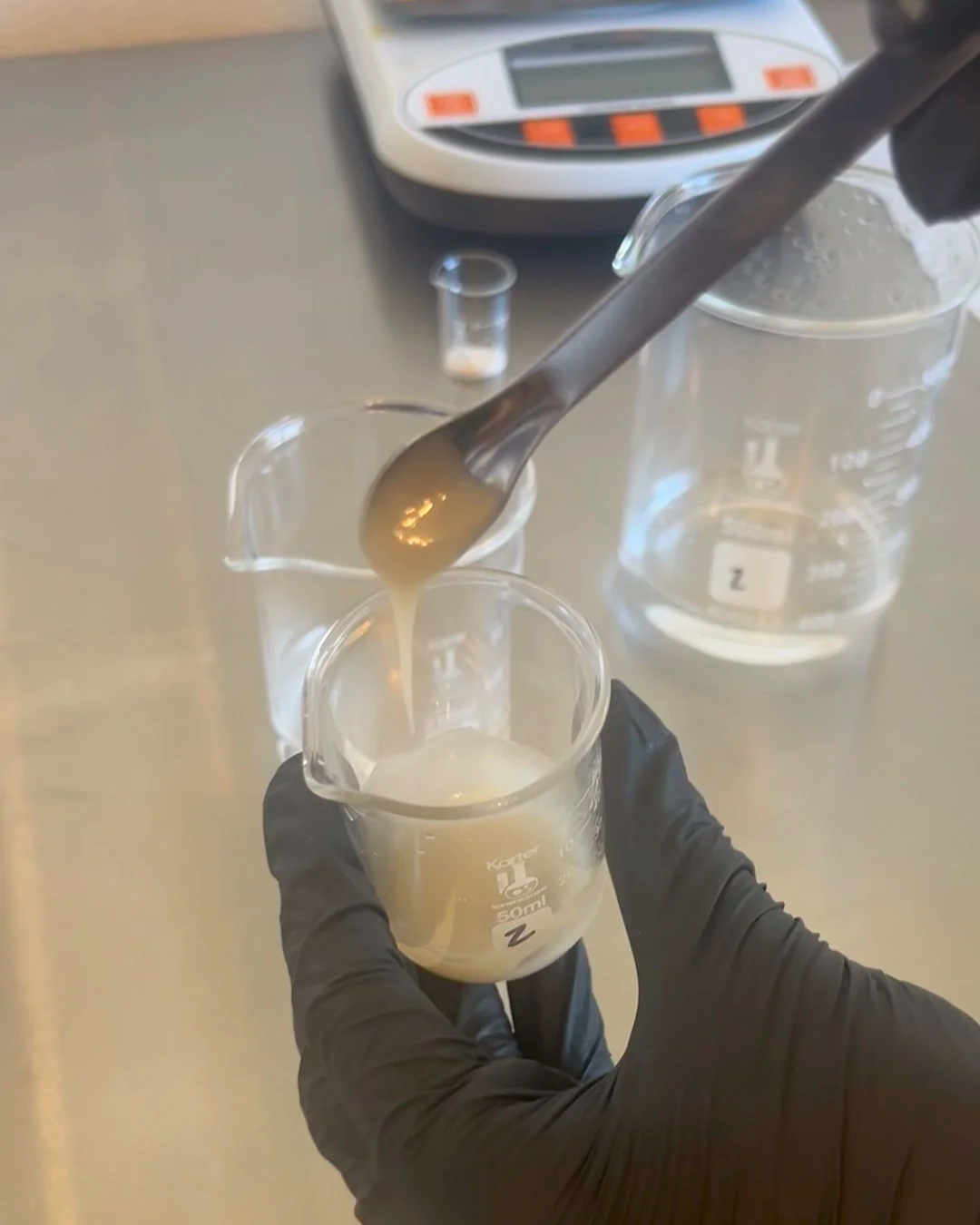
Xanthan gum and glycerin slurry
Formula – 200 g Batch
147.60 g Botanical Hydrosol
4.00 g Glycerin
2.00 g Xanthan Gum
0.40 g Potassium Sorbate
2.00 g Preservative Blend
12.00 g Cetyl Alcohol
8.00 g Kokum Butter
2.00 g Vitamin E
20.00 g Jojoba Oil
2.00 g Essential Oil Blend
Formulation Procedure
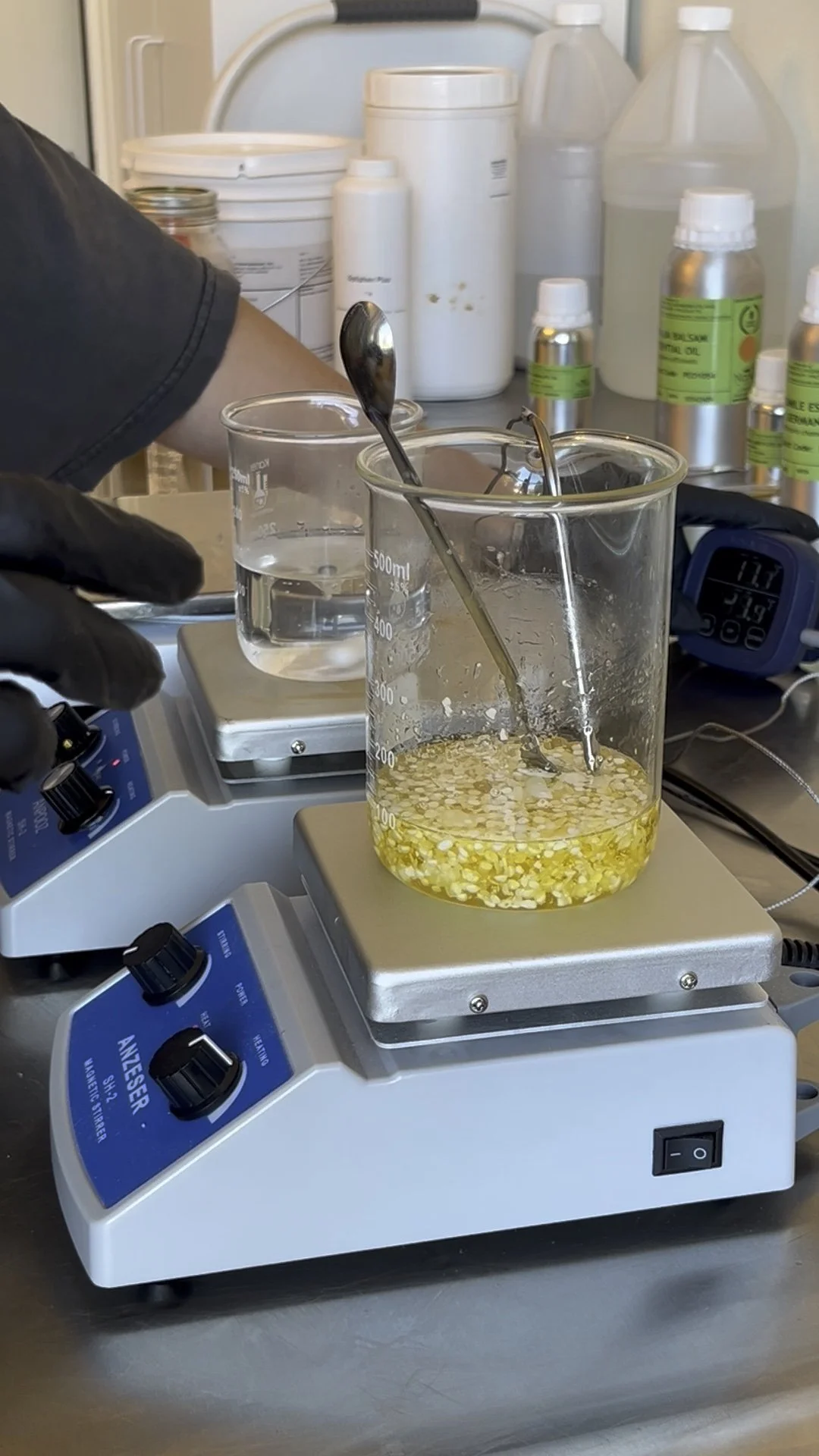
Heat oil phase to under 55°C; heat water phase or infusion separately.
Decant ½ of the heated water phase into a separate beaker.
Weigh your xanthan gum and add the glycerin to create a slurry
Add this slurry to ½ of the water and blend until it hydrates into a gel (this is our gel phase)
Check the temperature of the remaining water phase, oil phase and the gel phase and heat or cool until they are all the same temperature.
Combine the oil and water phases slowly under high-shear mixing. Then add the gel phase and continue to blend until completely homogenous.
Cool to 40°C before adding heat-sensitive extracts, and preservatives.
Check the pH of your final lotion and adjust if needed to match the range your preservative system performs best within. (typically between pH 4-6)
Conclusion: From Formula to Ritual
By making both a lotion and a cream, you’ve learned how to adjust oil-to-water ratios, manage multiple phases, and select the right texture for your skin’s needs and your ritual’s intention.
Lotions are your go-to for light, breathable hydration and quick absorption—perfect for energizing mornings or warm weather.
Creams offer deep, lasting nourishment and a sense of cocooning comfort—ideal for evening rituals, colder months, or skin in need of repair.
As you grow more confident, you can layer these skills with advanced techniques:
Infusing your own oils and hydrosols with herbs
Incorporating actives for targeted results
Creating seasonal variations to match climate and mood
Remember—formulation is both science and art. The science ensures stability, safety, and efficacy; the art is in how you choose your botanicals, textures, and scents to create a product that feels like it was made just for you.